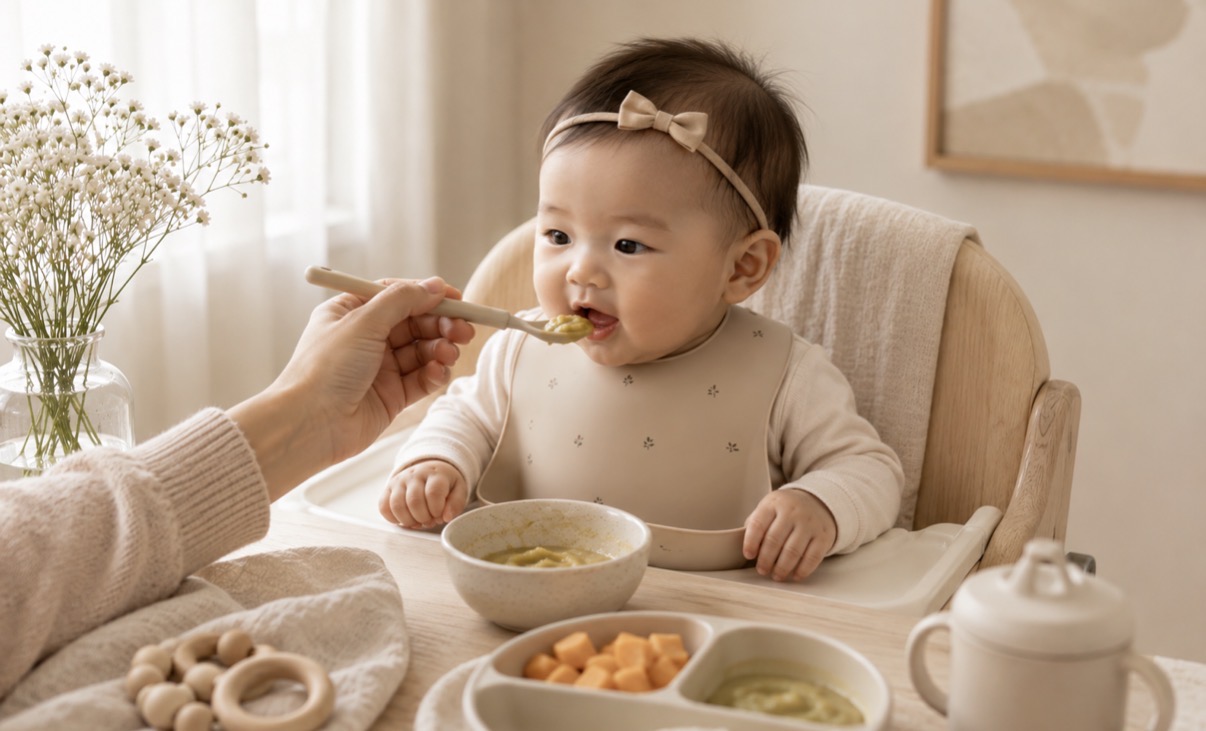
Disclaimer: This article reflects personal experience and is intended for general educational purposes only. It is not a substitute for professional medical advice, diagnosis, or treatment. Always consult your child’s licensed pediatrician or healthcare provider before making decisions about introducing solids or if you have questions about your child’s feeding and nutritional needs.
When my daughter was born, I spent months researching pregnancy, newborn sleep, breast-feeding schedules, and developmental milestones. But when our pediatrician mentioned we could start solids soon, I realized there was one thing I hadn’t prepared for at all: how to actually feed a baby.
Suddenly I was seeing terms like baby-led weaning, purées , allergen introduction, and first foods everywhere. As a first-time mom, I felt completely overwhelmed.
If you’re in that stage right now, you’re not alone. Here’s what I learned while starting solids with my daughter—and the simple freezer-tray hack that made homemade baby food surprisingly easy.
Why We Chose Purées
Like many parenting decisions, there isn’t one right answer for every family.
We started solids at 4 months with pediatrician approval, after our daughter showed clear signs of readiness. It’s worth noting most babies aren’t ready until closer to six months — the AAP recommends waiting until around 6 months for most infants, so starting earlier should always be a conversation with your pediatrician first, not something to base on age alone.
After doing some research, I decided to begin with purées.
But honestly, the biggest reason was simpler than that: purées felt manageable.
One reason was that I liked the idea of exposing her to a wide variety of fruits and vegetables early. I had read that repeated exposure to different flavors may help encourage more adventurous eating habits later on.
Key Takeaways
- We started solids at 4 months with pediatrician approval. Most babies begin around six months, but timing should be discussed with your child’s healthcare provider.
- We chose purées because they felt simple and manageable.
- Freezing purées into cubes saved time and reduced waste.
- You don’t have to choose between purées and baby-led weaning.
- Silicone freezer trays were my most-used feeding product.
The Purée Hack That Changed Everything
Of all the things I learned while starting solids, this may have been the most helpful.
Instead of storing homemade baby food in jars or containers, I froze everything in silicone ice cube trays.
After steaming and blending foods like pears, sweet potatoes, peas, green beans, or peaches, I poured the purée into the trays and froze them overnight. Once frozen, I popped the cubes into labeled freezer bags.
That one small system made homemade baby food incredibly easy.
When it was time to feed my daughter, I could grab exactly what I needed:
One cube.
Two cubes.
A mix of different flavors.
A larger serving as her appetite grew.
Not only did it save time, but it dramatically reduced waste.
My mom told me she made homemade baby food when I was a baby too. The difference was that she froze larger portions in jars and containers. While it worked, she often ended up thawing more than she actually needed.
The ice cube tray method solved that problem completely.
Instead of defrosting an entire container of sweet potatoes, I could thaw a single cube. If my daughter wanted more, I could simply add another cube.
- Sweet potato and pear
- Pea and pear
- Peach and banana
- Apple and sweet potato
If you’re planning to make your own baby food, silicone freezer trays would be the very first item I’d buy.
5 Products That Made Starting Solids Easier
If I were helping another first-time mom get started, these are the products I would recommend first.
1. Silicone Freezer Trays
Without question, my most-used item.
Being able to freeze homemade purées into individual cubes saved time, reduced waste, and made meal prep incredibly simple.
Affiliate Disclosure
This article contains paid links. If you purchase through one of these links, Bride to Baby may earn a commission at no additional cost to you. As an Amazon Associate I earn from qualifying purchases.
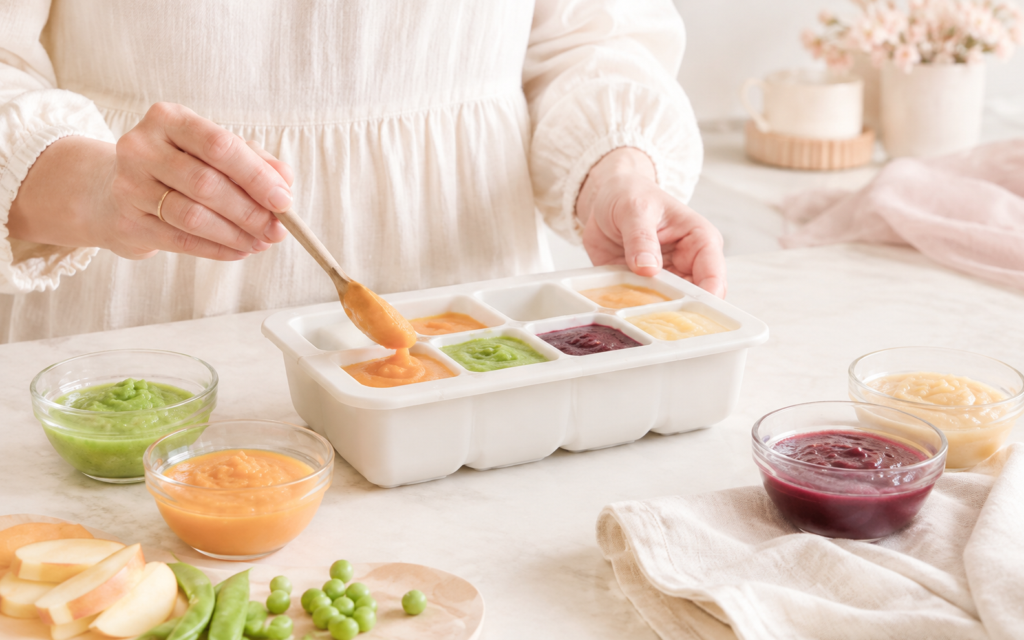
Silicone Freezer Tray
We prefer this ice cube tray with a silicone bottom for effortless release and lids to prevent freezer burn and contamination.
(paid link)
2. A Good Blender or Immersion Blender
You don’t need anything fancy. A basic blender or immersion blender makes it easy to create smooth homemade purées.
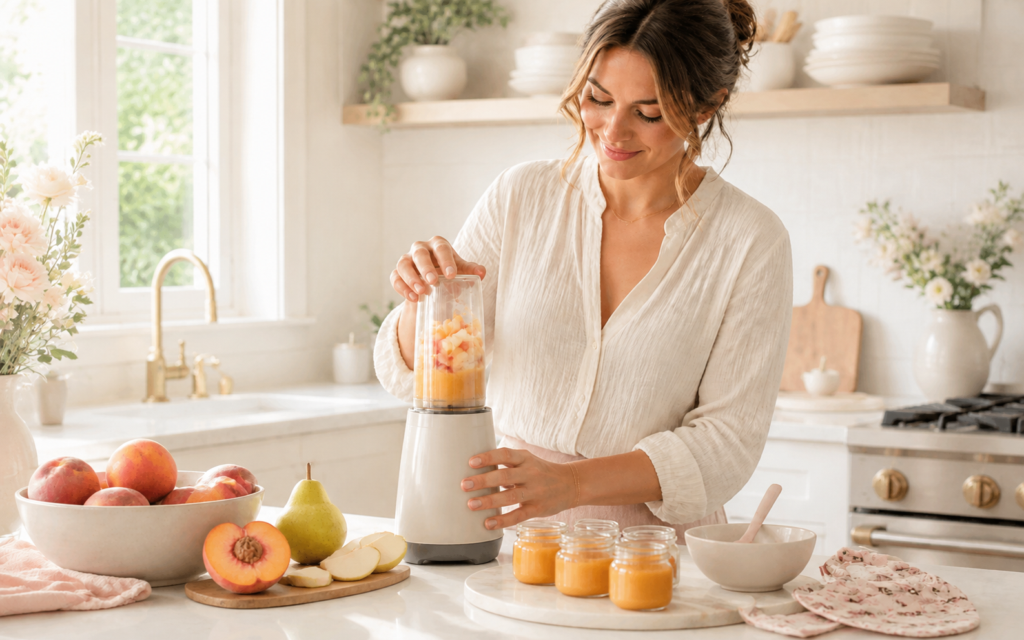
Magic Bullet Personal Blender
We like the Magic Bullet because its easy-pour lids and compact design make preparation and cleanup simple. It is also quieter than many full-size blenders, which is helpful when your baby is sleeping.
(paid link)
3. Silicone Bibs With Catch Pockets
No matter how careful you are, solids are messy. A silicone bib catches food before it lands in your baby’s lap—or on your floor.
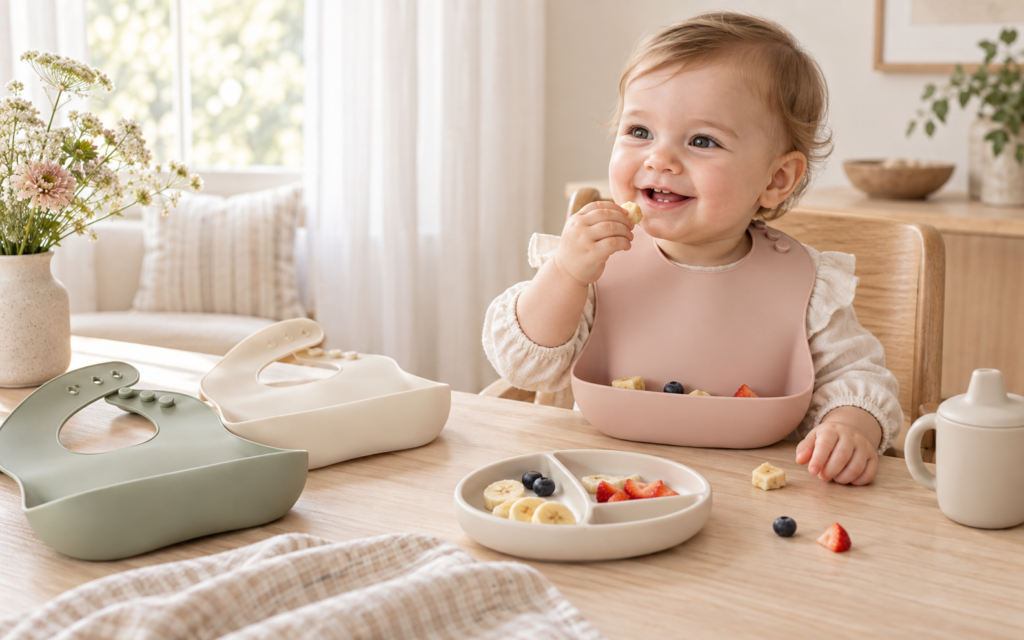
Silicone Bibs with Catch Pockets
We like these silicone bibs because they are easy to rinse clean and help contain the inevitable mess. The catch pocket collects dropped food before it reaches your baby’s clothes or the floor.
(paid link)
4. Silicone Feeders
These quickly became one of my favorite baby products. They’re great for introducing fruit safely and became especially helpful once teething started.
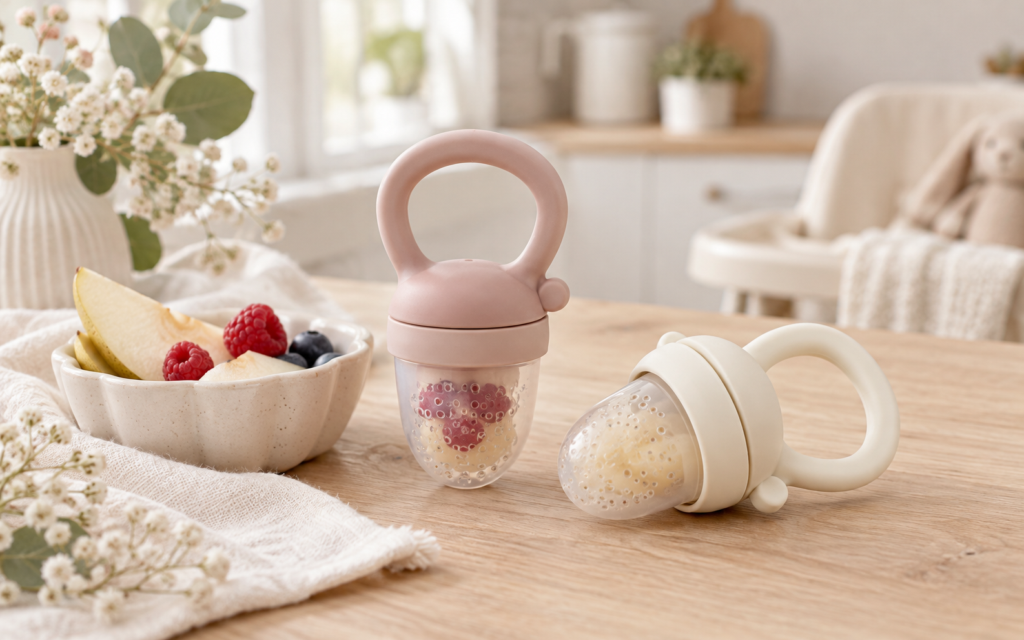
2 Pack Silicone Baby Fruit Feeders
These silicone feeders allow babies to explore soft fruits and other age-appropriate foods through a perforated pouch. The easy-grip handle encourages self-feeding while allowing only small amounts of food to pass through at a time.
(paid link)
5. A Supportive High Chair Setup
A sturdy high chair that allows your baby to sit upright comfortably can make feeding safer and more enjoyable for everyone involved.
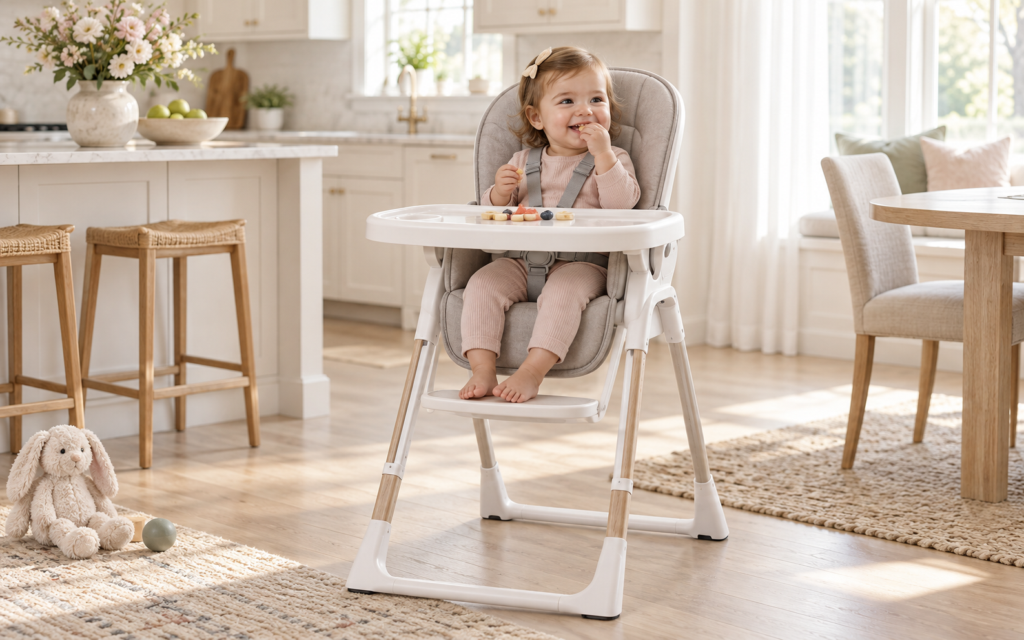
Graco Every Step 6 in 1 High Chair
We like this high chair because its wipeable seat, dishwasher-safe tray and removable straps make cleanup easier. Its adaptable 6-in-1 design also grows with your child, transitioning from an infant high chair to a big-kid step stool.
(paid link)
Purees vs Baby-Led Weaning: What Parents Should Know About Choking
One thing that surprised me was how often parents are told they need to choose between purées and baby-led weaning. Baby-led weaning introduces soft finger foods from the start. Some moms choose purées over baby-led weaning because they think babies are less likely to choke. Available research has generally not found that baby-led weaning increases choking risk compared with traditional spoon-feeding when foods are prepared appropriately and parents follow feeding-safety guidance.
Ultimately, many families choose to use a combination of both approaches, and that’s what felt right for us.
It’s up to you and your pediatrician to discuss and determine what’s best for your family and your baby. Understanding the benefits of each approach and knowing which foods to avoid can help you navigate those conversations with your partner and your pediatrician.
Benefits of Purées
- Easy to prepare
- Great for introducing many foods
- Easy to freeze and store
- Less intimidating for many first-time parents
Benefits of Baby-Led Weaning
- Encourages self-feeding
- Introduces textures early
- Helps babies participate in family meals
- Supports hand-eye coordination
High-Risk Choking Foods to Avoid
- Whole grapes
- Hot dog slices
- Nuts
- Popcorn
- Raw apple chunks
- Raw carrots
- Spoonfuls of peanut butter
- Marshmallows
No matter which approach you choose—traditional purées, baby-led weaning, or a combination of both—one of the most important things you can do before introducing solids is to learn infant CPR and choking first aid. While no feeding method can eliminate risk entirely, knowing how to recognize the difference between gagging and choking, and having the skills to respond in an emergency, can give you confidence during one of your baby’s biggest milestones. Hopefully you’ll never need to use those skills, but if you do, you’ll be grateful you took the time to prepare.
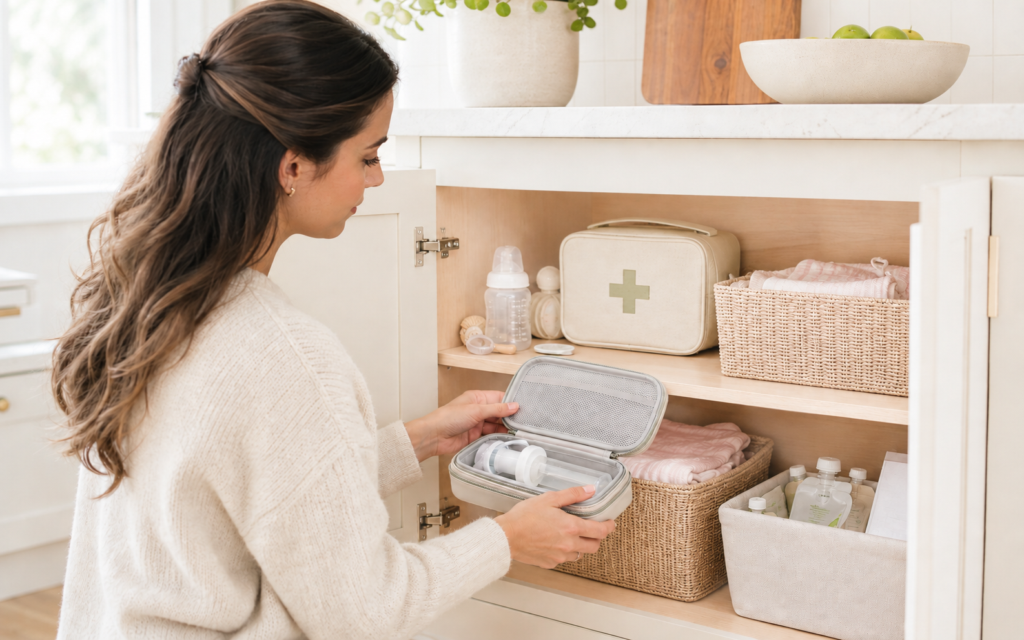
LifeVac
Traditional choking first aid and calling 911 should always come first. The FDA-authorized LifeVac is intended only for children age one and older and should be used only after established choking-rescue protocols have failed.
(paid link)
The First Foods We Tried
We started with simple, single-ingredient foods before gradually introducing combinations.
Our first foods included:
- Avocado
- Pears
- Apples
- Bananas
- Mangoes
- Peaches
- Sweet potatoes
- Steamed carrots
- Peas
- Green beans
- Butternut squash
- Broccoli
One of my favorite parts of making homemade purées was being able to expose my daughter to so many different flavors without spending a fortune on store-bought pouches and jars.
Starting with one food at a time also gave me peace of mind. It made it easier to watch for potential allergies while learning which foods she loved and which ones she preferred to avoid. As she grew, that knowledge became surprisingly valuable. I could blend nutrient-dense foods, like chicken, with sweeter favorites, like pears, to create meals she actually enjoyed eating.
As we became more comfortable, we moved beyond fruits and vegetables and began introducing iron-rich foods such as beef, eggs and iron-fortified infant cereal. In the beginning, solids were primarily about learning and exploration while breast milk or formula remained her main source of nutrition.
One thing that surprised me was learning that babies under a year old shouldn’t have honey or cow’s milk as a drink, and that plain water should only be offered in small sips after they begin solids—not as a replacement for breast milk or formula.
What I Wish I Knew Before Starting Solids
Looking back, I wish someone had told me three things:
- There is no perfect way to start solids.
- Your baby doesn’t need gourmet meals.
- It’s okay to learn as you go.
Before becoming a mom, I assumed there would be one correct method. Instead, I discovered that feeding a baby is often a process of experimenting, observing, and finding what works for your family.
Some days your baby will love peas. The next week they may act completely offended that peas ever existed.
That’s normal too.
If You’re Feeling Overwhelmed, You’re Not Behind
Starting solids can feel like a major milestone, but it doesn’t have to be complicated.
If you’re standing in your kitchen staring at a sweet potato and wondering how on earth you’re supposed to turn it into baby food, I promise you’re not the only one.
I was there too.
Your baby doesn’t need perfection. They need opportunities to explore, learn, and enjoy food alongside a parent who is doing their best.
You are not just teaching your baby how to eat.
You’re learning too.
And that’s exactly what motherhood looks like.
Additional Resources
- American Heart Association: Family & Friends CPR
- American Heart Association: Infant CPR Anytime
Bride to Baby
For the years between “I do” and “Mom.”
Affiliate Disclosure: This post contains affiliate links. If you make a purchase through one of these links, Bride to Baby may earn a commission at no additional cost to you. As an Amazon Associate I earn from qualifying purchases.